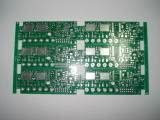
What is CEM-3 PCB?
CEM-3 (Composite Epoxy Material-3) is a type of printed circuit board (PCB) material made from a composite of woven fiberglass cloth with an epoxy resin binder. It is a high-quality, versatile PCB substrate that offers excellent mechanical and electrical properties, making it suitable for a wide range of applications.
CEM-3 PCB is known for its high strength, durability, and resistance to moisture and chemicals. It also has good thermal stability and dimensional stability, which means it can maintain its shape and size even under high temperatures and humidity.
Advantages of Using CEM-3 PCB
There are several advantages to using CEM-3 PCB in electronic devices and applications:
-
Cost-effective: CEM-3 PCB is a more affordable alternative to other high-performance PCB materials like FR-4. It offers similar properties at a lower cost, making it a cost-effective choice for many applications.
-
High strength and durability: CEM-3 PCB is made from a composite of woven fiberglass and epoxy resin, which gives it high strength and durability. It can withstand mechanical stress and impact without cracking or breaking.
-
Excellent electrical properties: CEM-3 PCB has good electrical insulation properties, with a dielectric constant of around 4.5 and a loss tangent of 0.03 at 1 MHz. This makes it suitable for high-frequency applications and helps to reduce signal loss and distortion.
-
Resistance to moisture and chemicals: CEM-3 PCB is resistant to moisture and many chemicals, which helps to protect it from environmental factors that can cause damage or degradation over time.
-
Good thermal stability: CEM-3 PCB has good thermal stability, which means it can maintain its properties even at high temperatures. This makes it suitable for applications where heat dissipation is a concern.

Applications of CEM-3 PCB
CEM-3 PCB is used in a wide range of electronic devices and applications, including:
-
Consumer electronics: CEM-3 PCB is commonly used in consumer electronics like smartphones, tablets, laptops, and gaming consoles.
-
Automotive electronics: CEM-3 PCB is used in automotive electronics like infotainment systems, sensors, and control modules.
-
Industrial electronics: CEM-3 PCB is used in industrial electronics like automation systems, power supplies, and motor controls.
-
Medical devices: CEM-3 PCB is used in medical devices like patient monitors, imaging systems, and diagnostic equipment.
-
Aerospace and defense: CEM-3 PCB is used in aerospace and defense applications like avionics, radar systems, and communication equipment.

Choosing a CEM-3 PCB Manufacturer
When choosing a CEM-3 PCB manufacturer, there are several factors to consider:
-
Quality and reliability: Look for a manufacturer with a proven track record of producing high-quality, reliable CEM-3 PCBs. Check for certifications like ISO 9001 and UL listing to ensure that the manufacturer adheres to industry standards and best practices.
-
Manufacturing capabilities: Consider the manufacturer’s manufacturing capabilities, including the types of PCBs they can produce (e.g. single-sided, double-sided, multilayer), the minimum and maximum board sizes they can handle, and the types of finishes they offer (e.g. HASL, ENIG, OSP).
-
Turnaround time: Look for a manufacturer that can meet your delivery requirements and provide fast turnaround times when needed. Some manufacturers offer expedited services for urgent orders.
-
Customer service and support: Choose a manufacturer with responsive and helpful customer service and technical support. They should be able to answer your questions, provide guidance on design and manufacturing, and assist with troubleshooting if necessary.
-
Pricing: Compare pricing from multiple manufacturers to ensure you are getting a competitive price for your CEM-3 PCBs. However, don’t sacrifice quality for the lowest price – a reliable, high-quality manufacturer may cost slightly more but can save you money in the long run by reducing defects and failures.

Top CEM-3 PCB Manufacturers
Here are some of the top CEM-3 PCB manufacturers in the industry:
| Manufacturer | Location | Capabilities | Certifications |
|---|---|---|---|
| PCBWay | China | Single-sided, double-sided, multilayer | ISO 9001, UL, RoHS |
| JLCPCB | China | Single-sided, double-sided, multilayer | ISO 9001, UL, RoHS |
| Advanced Circuits | USA | Single-sided, double-sided, multilayer | ISO 9001, UL, ITAR |
| Sunstone Circuits | USA | Single-sided, double-sided, multilayer | ISO 9001, ITAR |
| Seeed Studio | China | Single-sided, double-sided | ISO 9001, UL, RoHS |
Note: This is not an exhaustive list and there are many other reputable CEM-3 PCB manufacturers around the world.
CEM-3 PCB Manufacturing Process
The manufacturing process for CEM-3 PCBs typically involves the following steps:
-
Design and Gerber file generation: The PCB design is created using CAD software and Gerber files are generated for each layer of the board.
-
Material selection and cutting: The CEM-3 material is selected based on the specifications of the PCB and cut to the required size.
-
Drilling: Holes are drilled into the CEM-3 material for through-hole components and vias.
-
Copper foil lamination: Copper foil is laminated onto the CEM-3 material using heat and pressure.
-
Etching: The unwanted copper is etched away using a chemical process, leaving only the desired circuit pattern.
-
Soldermask application: A soldermask layer is applied to the PCB to protect the copper traces and prevent solder bridging.
-
Silkscreen printing: The silkscreen layer is printed onto the PCB to add text and symbols for component placement and identification.
-
Surface finish application: A surface finish (e.g. HASL, ENIG, OSP) is applied to the exposed copper to protect it from oxidation and enhance solderability.
-
Electrical testing: The PCB is electrically tested to ensure that all connections are functioning correctly and there are no short circuits or open circuits.
-
Final inspection and packaging: The PCB undergoes a final visual inspection and is packaged for shipping to the customer.
CEM-3 vs Other PCB Materials
CEM-3 is just one of many PCB materials available. Here is a comparison of CEM-3 with some other common PCB materials:
| Material | Composition | Dielectric Constant | Loss Tangent | Tg (°C) | Td (°C) | Moisture Absorption | Flammability |
|---|---|---|---|---|---|---|---|
| CEM-3 | Woven fiberglass + epoxy resin | 4.5 | 0.03 | 130 | 290 | 0.15% | UL 94 V-0 |
| FR-4 | Woven fiberglass + epoxy resin | 4.5 | 0.02 | 130-140 | 300-340 | 0.15% | UL 94 V-0 |
| Polyimide | Polyimide film | 3.5 | 0.003 | 260 | >500 | 0.4-0.8% | UL 94 V-0 |
| PTFE | Polytetrafluoroethylene | 2.1 | 0.0003 | 327 | 400 | <0.01% | UL 94 V-0 |
| Aluminum | Aluminum | – | – | – | 660 | – | Non-flammable |
Note: Tg = Glass transition temperature, Td = Decomposition temperature
As you can see, CEM-3 has properties similar to FR-4, but at a lower cost. Polyimide and PTFE have better high-temperature performance and lower loss tangents, but are more expensive. Aluminum PCBs are used for heat dissipation but are not suitable for all applications.
FAQ
-
What is the difference between CEM-3 and FR-4 PCB?
CEM-3 and FR-4 are both made from woven fiberglass and epoxy resin, and have similar properties. However, CEM-3 is a lower-cost alternative to FR-4 and may have slightly lower performance in some areas like moisture resistance and high-temperature performance. -
Can CEM-3 PCB be used for high-frequency applications?
Yes, CEM-3 PCB can be used for high-frequency applications up to a few GHz. It has a dielectric constant of around 4.5 and a loss tangent of 0.03 at 1 MHz, which is suitable for most high-frequency applications. -
What surface finishes are available for CEM-3 PCB?
CEM-3 PCB can be finished with a variety of surface finishes, including HASL (Hot Air Solder Leveling), ENIG (Electroless Nickel Immersion Gold), and OSP (Organic Solderability Preservative). The choice of surface finish depends on the specific requirements of the application, such as solderability, durability, and cost. -
How do I choose the right thickness for my CEM-3 PCB?
The thickness of your CEM-3 PCB depends on several factors, including the number of layers, the weight and size of the components, and the mechanical requirements of the application. In general, thicker boards are more rigid and can support heavier components, but are also more expensive and may have longer lead times. Your PCB manufacturer can help you choose the appropriate thickness based on your specific requirements. -
What is the lead time for CEM-3 PCB manufacturing?
The lead time for CEM-3 PCB manufacturing varies depending on the complexity of the design, the quantity ordered, and the manufacturer’s capacity. Typical lead times range from a few days to several weeks. Some manufacturers offer expedited services for faster turnaround times, but this may come at an additional cost. It’s important to plan ahead and communicate your delivery requirements with your manufacturer to ensure that your PCBs are delivered on time.
Conclusion
CEM-3 PCB is a high-quality, cost-effective choice for a wide range of electronic applications. It offers excellent mechanical and electrical properties, and is resistant to moisture, chemicals, and high temperatures. When choosing a CEM-3 PCB manufacturer, it’s important to consider factors like quality, reliability, manufacturing capabilities, turnaround time, customer service, and pricing. By selecting the right manufacturer and specifying the appropriate design parameters, you can ensure that your CEM-3 PCBs meet your performance and reliability requirements while staying within your budget.

Leave a Reply