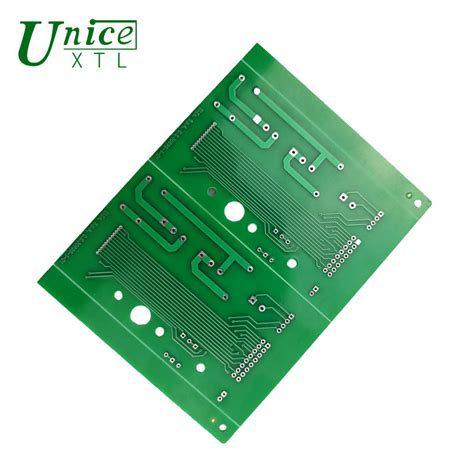
What is a CEM PCB?
A CEM PCB, or a Contract Electronics Manufacturer Printed Circuit Board, is a type of printed circuit board that is manufactured by a third-party company on behalf of another company. These manufacturers specialize in the production of PCBs and offer their services to companies that require high-quality, reliable, and cost-effective PCBs for their products.
CEM PCBs are used in a wide range of industries, including:
- Aerospace
- Automotive
- Consumer electronics
- Industrial automation
- Medical devices
- Telecommunications
Advantages of Using CEM PCB Manufacturers
There are several advantages to using CEM PCB manufacturers for your PCB needs:
-
Cost-effective: CEM PCB manufacturers often have lower overhead costs compared to in-house PCB production, resulting in more affordable prices for their clients.
-
Expertise: CEM PCB manufacturers have specialized knowledge and experience in PCB production, ensuring high-quality products that meet industry standards.
-
Scalability: CEM PCB manufacturers can handle both small and large-scale production runs, allowing companies to scale their PCB needs as their business grows.
-
Access to advanced technology: CEM PCB manufacturers invest in state-of-the-art equipment and technologies to stay competitive in the market, providing their clients with access to the latest PCB manufacturing techniques.
-
Faster time-to-market: By outsourcing PCB production to a CEM PCB manufacturer, companies can focus on their core competencies and reduce the time required to bring their products to market.
Choosing the Right CEM PCB Manufacturer
When selecting a CEM PCB manufacturer, there are several factors to consider:
-
Expertise: Look for a manufacturer with experience in producing PCBs for your specific industry and application.
-
Quality: Ensure that the manufacturer adheres to industry standards and has a robust quality control process in place.
-
Capacity: Verify that the manufacturer has the capacity to handle your production volume and can scale up as needed.
-
Lead time: Consider the manufacturer’s lead time and ensure that it aligns with your project timeline.
-
Customer support: Choose a manufacturer that offers excellent customer support and communication throughout the production process.
Top CEM PCB Manufacturers
Here are some of the top CEM PCB manufacturers in the industry:
| Manufacturer | Location | Specialties |
|---|---|---|
| Foxconn | Taiwan | Consumer electronics, automotive, industrial |
| Jabil | USA | Aerospace, defense, healthcare, telecommunications |
| Flex | Singapore | Automotive, consumer electronics, healthcare |
| Celestica | Canada | Aerospace, defense, industrial, healthcare |
| Sanmina | USA | Automotive, medical, industrial, defense |

The CEM PCB Manufacturing Process
The CEM PCB manufacturing process typically involves the following steps:
-
Design: The client provides the PCB design files to the CEM PCB manufacturer.
-
Prototyping: The manufacturer creates a prototype of the PCB for the client to review and approve.
-
Fabrication: Once the prototype is approved, the manufacturer begins the fabrication process, which includes:
- Printing the circuit pattern onto the PCB substrate
- Etching away the unwanted copper
- Drilling holes for components
-
Applying a solder mask and silkscreen
-
Assembly: The manufacturer then assembles the components onto the PCB using either through-hole or surface-mount technology.
-
Testing: The assembled PCBs undergo rigorous testing to ensure they meet the required specifications and are free of defects.
-
Packaging and shipping: The finished PCBs are packaged and shipped to the client.
CEM PCB Manufacturing Techniques
CEM PCB manufacturers use various techniques to produce high-quality PCBs, including:
-
Surface-mount technology (SMT): SMT involves placing components directly onto the surface of the PCB, allowing for smaller and more compact designs.
-
Through-hole technology (THT): THT involves inserting component leads through holes drilled in the PCB and soldering them on the opposite side. This technique is often used for larger components or when greater mechanical strength is required.
-
Multilayer PCBs: Multilayer PCBs consist of multiple layers of conductive material separated by insulating layers, allowing for more complex designs and higher component density.
-
Flexible PCBs: Flexible PCBs are made from flexible substrates, such as polyimide, and can be bent or folded to fit into tight spaces or conform to unique shapes.
-
Rigid-flex PCBs: Rigid-flex PCBs combine rigid and flexible sections, providing the benefits of both technologies in a single PCB.

CEM PCB Materials
CEM PCB manufacturers use a variety of materials to produce PCBs, each with its own unique properties and advantages. Some common CEM PCB materials include:
-
FR-4: FR-4 is a glass-reinforced epoxy laminate and is the most widely used material for PCBs. It offers good electrical insulation, mechanical strength, and thermal stability.
-
Polyimide: Polyimide is a high-performance plastic material used for flexible PCBs. It offers excellent thermal and chemical resistance, as well as good electrical properties.
-
PTFE: Polytetrafluoroethylene (PTFE) is a fluoropolymer used for high-frequency and microwave applications. It offers excellent dielectric properties and low dissipation factors.
-
Aluminum: Aluminum PCBs are used in applications that require high thermal conductivity, such as LED lighting and power electronics.
-
Copper: Copper is the most common conductive material used in PCBs due to its excellent electrical conductivity and relatively low cost.
Selecting the Right CEM PCB Material
When choosing a CEM PCB material, consider the following factors:
-
Electrical requirements: Consider the dielectric constant, dissipation factor, and electrical conductivity of the material.
-
Thermal requirements: Evaluate the thermal conductivity and thermal expansion coefficient of the material, especially for applications with high heat generation.
-
Mechanical requirements: Assess the material’s strength, flexibility, and dimensional stability based on your application’s needs.
-
Environmental requirements: Consider the material’s resistance to moisture, chemicals, and other environmental factors that may affect the PCB’s performance.
-
Cost: Compare the cost of different materials and select the one that offers the best balance of performance and affordability for your application.

CEM PCB Testing and Quality Control
CEM PCB manufacturers employ various testing and quality control methods to ensure that their products meet the required specifications and are free of defects. Some common testing and quality control techniques include:
-
Automated optical inspection (AOI): AOI uses cameras and image processing software to automatically inspect PCBs for defects such as missing components, incorrect component placement, and solder bridges.
-
X-ray inspection: X-ray inspection is used to detect defects that are not visible on the surface of the PCB, such as voids in solder joints and incorrect component placement in ball grid array (BGA) packages.
-
In-circuit testing (ICT): ICT involves using a bed-of-nails fixture to make electrical contact with specific points on the PCB and testing the functionality of individual components and circuits.
-
Functional testing: Functional testing involves testing the PCB under real-world operating conditions to ensure that it performs as intended.
-
Burn-in testing: Burn-in testing involves subjecting the PCB to elevated temperatures and voltages for an extended period to identify any early-life failures.
Importance of Testing and Quality Control
Testing and quality control are critical to ensuring the reliability and performance of CEM PCBs. By identifying and correcting defects early in the manufacturing process, CEM PCB manufacturers can:
-
Reduce costs: Identifying defects early in the manufacturing process can help avoid costly rework and scrap.
-
Improve reliability: Thorough testing and quality control help ensure that PCBs will perform reliably in the field, reducing the risk of product failures and returns.
-
Enhance customer satisfaction: By delivering high-quality PCBs that meet or exceed customer expectations, CEM PCB manufacturers can build strong relationships with their clients and establish a reputation for excellence.
-
Comply with industry standards: Testing and quality control help ensure that PCBs meet relevant industry standards and regulations, such as IPC, UL, and RoHS.
-
Optimize manufacturing processes: By analyzing testing and quality control data, CEM PCB manufacturers can identify areas for improvement in their manufacturing processes, leading to increased efficiency and productivity.
Future Trends in CEM PCB Manufacturing
The CEM PCB industry is constantly evolving to meet the changing needs of its customers and stay ahead of technological advancements. Some of the future trends in CEM PCB manufacturing include:
-
Miniaturization: As electronic devices continue to shrink in size, CEM PCB manufacturers will need to produce smaller and more compact PCBs with higher component density.
-
High-speed applications: With the growing demand for high-speed data transmission in applications such as 5G networks and data centers, CEM PCB manufacturers will need to produce PCBs that can handle higher frequencies and faster signal speeds.
-
Additive manufacturing: Additive manufacturing techniques, such as 3D printing, are expected to play a larger role in PCB production, enabling faster prototyping and more complex geometries.
-
Sustainable manufacturing: As environmental concerns continue to grow, CEM PCB manufacturers will need to adopt more sustainable practices, such as using eco-friendly materials and reducing waste.
-
Industry 4.0: The integration of advanced technologies, such as artificial intelligence, machine learning, and the Internet of Things, into the PCB manufacturing process will lead to smarter, more efficient, and more automated production lines.
Preparing for the Future
To stay competitive in the evolving CEM PCB industry, manufacturers should:
-
Invest in research and development: Continuously explore new technologies, materials, and processes to stay ahead of the curve.
-
Foster partnerships: Collaborate with suppliers, customers, and industry partners to share knowledge and resources and drive innovation.
-
Embrace digitalization: Adopt digital technologies to streamline processes, improve efficiency, and enhance product quality.
-
Prioritize sustainability: Implement sustainable practices to reduce environmental impact and meet growing customer demand for eco-friendly products.
-
Develop a skilled workforce: Invest in training and education programs to ensure that employees have the skills and knowledge needed to succeed in the evolving industry.
Frequently Asked Questions (FAQ)
-
What is the difference between a CEM PCB and a standard PCB?
A CEM PCB is manufactured by a third-party company on behalf of another company, while a standard PCB is typically manufactured in-house by the company that designs and uses it. -
How do I choose the right CEM PCB manufacturer for my project?
When choosing a CEM PCB manufacturer, consider factors such as expertise, quality, capacity, lead time, and customer support. Look for a manufacturer that has experience in your specific industry and can meet your project’s unique requirements. -
What are the most common materials used in CEM PCB manufacturing?
The most common materials used in CEM PCB manufacturing include FR-4, polyimide, PTFE, aluminum, and copper. Each material has its own unique properties and advantages, and the choice of material depends on the specific requirements of the application. -
Why is testing and quality control important in CEM PCB manufacturing?
Testing and quality control are critical to ensuring the reliability and performance of CEM PCBs. They help identify and correct defects early in the manufacturing process, reduce costs, improve reliability, enhance customer satisfaction, comply with industry standards, and optimize manufacturing processes. -
What are some of the future trends in CEM PCB manufacturing?
Some of the future trends in CEM PCB manufacturing include miniaturization, high-speed applications, additive manufacturing, sustainable manufacturing, and the integration of advanced technologies such as artificial intelligence and the Internet of Things. To stay competitive, CEM PCB manufacturers need to invest in research and development, foster partnerships, embrace digitalization, prioritize sustainability, and develop a skilled workforce.

Leave a Reply