

What is PCB Fabrication?
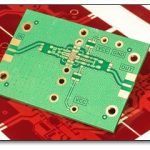
PCB fabrication, also known as PCB manufacturing, is the process of creating the bare printed circuit board. This involves taking the design files (usually Gerber files) and using them to create the physical board substrate with the required copper traces, drilled holes, and other features.
The key steps in PCB fabrication typically include:
- Printing the circuit pattern onto the copper clad board using photoresist and exposing it to UV light
- Etching away the unwanted copper to leave behind the desired traces
- Drilling holes for through-hole components and vias
- Applying solder mask to protect the copper traces
- Adding silkscreen for labeling and marking components
By the end of the fabrication process, you have the bare PCB ready for components to be soldered onto it. The fabrication process determines the physical and electrical characteristics of the board, such as the number of layers, trace width and spacing, hole sizes, and overall board dimensions.
Types of PCB fabrication
There are several common types of PCB fabrication, based on the number of conductive layers and other special requirements:
| PCB Type | Description |
|---|---|
| Single-sided | Has conductive copper traces on only one side of the board |
| Double-sided | Has copper traces on both top and bottom layers, which are connected by through-hole plating |
| Multi-layer | Has three or more conductive copper layers with insulating layers in between, connected by plated through holes |
| Flexible | Uses a flexible substrate material instead of rigid FR4, allowing the PCB to bend and fit into tight spaces |
| Rigid-flex | Combines rigid PCB sections with flexible circuits in between, for more complex 3D assembly |
| HDI | High Density Interconnect boards with micro-vias and fine pitch traces for compact high-performance applications |
The choice of fabrication type depends on the specific electrical, mechanical, and environmental requirements of the end application. More complex boards with higher layer counts are usually more expensive and time consuming to fabricate.
What is PCB Assembly?
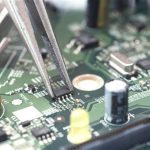
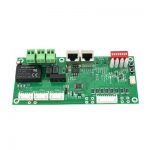
PCB assembly, on the other hand, refers to the process of soldering or mounting the electronic components onto the fabricated circuit board. This is what turns the bare board into a functional Electronic Assembly.
The main steps involved in PCB assembly are:
- Applying solder paste onto the PCB pads where components will be placed
- Picking and placing components onto the board using automated machines or sometimes by hand
- Reflowing the board through an oven to melt the solder paste and create permanent solder joints
- Inspecting and testing the assembled board to ensure proper connections and functionality
There are two primary methods used for PCB assembly:
Through-hole assembly
Through-hole components have long leads that are inserted into drilled holes on the PCB. The leads are then soldered to pads on the opposite side of the board. Through-hole assembly is an older technology that is still used for some large components and in applications requiring high mechanical strength.
Surface mount assembly
Surface mount technology (SMT) has largely replaced through-hole in most modern PCB assemblies. Surface mount components are much smaller, with short leads or flat contacts that are soldered directly onto pads on the PCB surface. SMT allows for much higher component density, smaller board sizes, and automated assembly.
Most PCB assemblies today use a combination of SMT and through-hole components, with the bulk of smaller parts being surface-mounted, and connectors, large capacitors, and other bulky components using through-hole mounting.

PCB fabrication vs assembly
To summarize the key differences between PCB fabrication and assembly:
| PCB Fabrication | PCB Assembly |
|---|---|
| Creates the bare circuit board | Mounts components onto the fabricated board |
| Involves printing, etching, drilling, and laminating | Involves solder paste application, pick-and-place, and reflow |
| Determines physical board properties like size and layer count | Determines the functionality and performance of the circuit |
| Requires Gerber files and drill data as inputs | Requires the BOM, centroid file, and assembly drawing as inputs |
| Typically charged per board area and layer count | Typically charged per component, with additional fees for programming and testing |
Another way to look at it is that PCB fabrication creates the empty canvas, while assembly fills in the details to create the final masterpiece. Both processes must be properly managed and quality controlled to ensure a successful end product.
Choosing a PCB manufacturer
When selecting a company to fabricate and assemble your PCBs, there are several key factors to consider:
- Technical capabilities – Can they fabricate the required board type and complexity? Do they have the necessary assembly equipment and expertise?
- Quality certifications – Look for manufacturers with industry certifications like ISO 9001, UL, and IPC to ensure they follow strict quality standards.
- Experience and expertise – How long have they been in business? Do they specialize in a particular industry or application type?
- Pricing and lead times – Get quotes from multiple providers to compare costs and delivery times. Be aware of potential trade-offs between price and quality.
- Support and communication – How responsive and helpful are they in answering your technical questions? Will they provide design feedback and suggestions for improvement?
It’s also a good idea to start with a small prototype or pilot run before committing to a full production order, to evaluate the manufacturer’s capabilities and build a working relationship.

Benefits of an integrated approach
While some companies specialize solely in either PCB fabrication or assembly, there are several advantages to choosing a manufacturer that offers both services under one roof:
- Streamlined communication – With a single point of contact for both fabrication and assembly, there’s less chance of miscommunication or delays.
- Faster turnaround times – When boards go straight from fabrication to assembly without shipping in between, the overall production time can be significantly reduced.
- Design for manufacturing – An integrated manufacturer can provide feedback on your design to optimize it for their fabrication and assembly processes, catching potential issues early.
- Shared quality responsibility – With one company responsible for the entire build, there’s no finger-pointing between fabricator and assembler if problems arise.
- Volume discounts – Bundling fabrication and assembly services together can often result in lower overall costs, especially at higher volumes.
Of course, there are also scenarios where it makes sense to use separate fab and assembly houses, such as when the PCB is very specialized or high-volume, or when the assembly requires specific expertise that the fabricator does not have in-house.

Conclusion
PCB fabrication and assembly are two essential steps in the process of bringing a Circuit board design to life as a functional electronic product. While fabrication creates the bare board with the necessary copper traces and features, assembly populates the board with components to make it operate as intended.
By understanding the key differences and considerations involved in each process, engineers and product managers can make informed decisions when selecting manufacturers and managing the overall production workflow. Whether using an integrated provider or separate fab and assembly houses, careful planning and attention to detail are necessary to ensure a smooth and successful PCB build.
Frequently Asked Questions
What file formats are needed for PCB fabrication and assembly?
For fabrication, the main files needed are the Gerber files (one for each layer of the board), the drill file (usually Excellon format), and the board outline file. For assembly, the key files are the Bill of Materials (BOM), the centroid or pick-and-place file (showing where each component is placed), and the assembly drawings.
What is the typical turnaround time for PCB fab and assembly?
The fabrication time depends on the board complexity and the manufacturer’s capacity, but a simple 2-layer board can often be fabricated in 1-2 days, while a complex HDI board may take a week or more. Assembly time also varies based on the number and types of components, but a basic SMT Assembly can usually be completed in 2-3 days. Faster turnaround times are possible with rush fees.
What are some common PCB materials and finishes?
The most common PCB substrate material is FR-4, a glass-reinforced epoxy laminate. Other options include aluminum for heatsinking, flexible polymers like Kapton, and specialized RF substrates. Common finishes for the exposed copper include HASL (hot air solder leveling), ENIG (electroless nickel immersion gold), and OSP (organic solderability preservative).
What are some typical defects to watch out for in PCB fab and assembly?
Some fabrication defects include over/under-etching of traces, incorrect hole sizes or locations, and issues with solder mask or silkscreen alignment. Common assembly defects include bridging (solder shorts), tombstoning (components standing up on one end), and incorrect or missing parts. Catching these issues requires thorough automated and manual inspection.
How much do PCB fabrication and assembly typically cost?
The cost of fabrication depends mainly on the board size, number of layers, and the overall complexity. A small 2-layer board may cost under $10 per piece, while a large, complex HDI board can easily exceed $100 each. Assembly costs depend on the number and types of components, with additional programming and testing fees. A simple assembly might add $20-50 to the board cost, while a complex board with many parts could be several hundred dollars. Volume discounts and offshoring can significantly reduce these costs.

Leave a Reply