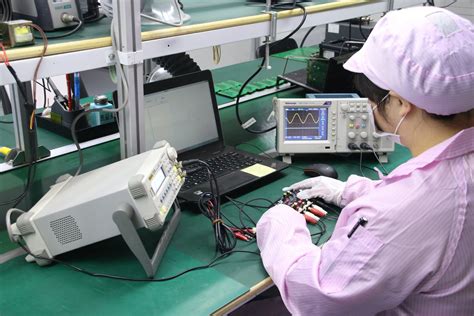
Why is PCB Testing Important?
PCB testing plays a vital role in the electronics manufacturing process for several reasons:
-
Quality Assurance: Testing helps ensure that the manufactured PCBs meet the required quality standards and specifications.
-
Reliability: Thorough testing identifies potential issues that could lead to field failures, thereby improving the overall reliability of the final product.
-
Cost Savings: Detecting and resolving issues early in the manufacturing process can save significant costs associated with rework, repairs, and product recalls.
-
Time-to-Market: Efficient testing processes help streamline the manufacturing workflow, reducing lead times and enabling faster time-to-market for electronic products.
Types of PCB Testing
There are various types of PCB tests performed at different stages of the manufacturing process. These tests can be broadly categorized into two main types: prototype testing and production testing.
Prototype Testing
Prototype testing is conducted on the initial PCB designs to validate their functionality, performance, and compliance with design specifications. The following are some common prototype tests:
1. Visual Inspection
Visual inspection is the first step in PCB testing, where the board is examined for any obvious defects, such as:
- Incorrect component placement
- Solder bridges or shorts
- Damaged or missing components
- Improperly etched traces
This inspection can be performed manually using magnifying lenses or automatically using automated optical inspection (AOI) systems.
2. Continuity Testing
Continuity testing verifies that the electrical connections on the PCB are intact and there are no open circuits. This test is typically performed using a multimeter or a dedicated Continuity Tester. The test checks for:
- Continuity between connected points
- Absence of short circuits
- Correct resistance values for certain components
3. Power-On Testing
Power-on testing involves applying power to the PCB and verifying that it functions as expected. This test checks for:
- Correct voltage levels at various test points
- Proper current consumption
- Absence of smoke or burning odors
- Correct LED or display functionality (if applicable)
4. Functional Testing
Functional testing validates that the PCB performs its intended functions correctly. This test varies depending on the specific application of the PCB and may involve:
- Testing input/output signals
- Verifying communication interfaces (e.g., USB, I2C, SPI)
- Checking sensor readings
- Running software tests or test scripts
Production Testing
Once the Prototype PCBs have been thoroughly tested and validated, the focus shifts to production testing. Production testing ensures that each manufactured PCB meets the required quality standards and functions as intended. The following are some common production tests:
1. In-Circuit Testing (ICT)
In-circuit testing is an automated test method that verifies the presence, orientation, and value of individual components on the PCB. ICT systems use a bed-of-nails fixture to make electrical contact with specific test points on the board. The test system then performs a series of measurements to check for:
- Correct component values (resistance, capacitance, inductance)
- Proper component orientation
- Shorts or opens in the circuit
- Correct power supply voltages
2. Flying Probe Testing
Flying probe testing is an alternative to ICT that uses movable test probes to make contact with test points on the PCB. This method is more flexible than ICT and doesn’t require a dedicated test fixture. Flying probe testing is often used for:
- Low-volume production runs
- Boards with limited test points
- Testing specific components or circuits
3. Boundary Scan Testing
Boundary scan testing, also known as JTAG testing, is a method that uses a built-in test access port (TAP) to test the interconnections between digital components on the PCB. This test method is particularly useful for testing complex digital circuits, such as microprocessors, FPGAs, and ASICs. Boundary scan testing can detect:
- Shorts and opens in the interconnections
- Stuck-at faults (signals permanently stuck at a high or low level)
- Incorrect component orientation or placement
4. Functional Testing
Functional testing at the production stage is similar to the functional testing performed during prototype testing. However, production functional testing often involves automated test equipment (ATE) and test software to ensure consistent and efficient testing across large volumes of PCBs.

Best Practices for PCB Testing
To ensure effective and efficient PCB testing, consider the following best practices:
-
Start Testing Early: Begin testing as early as possible in the design and manufacturing process to identify and resolve issues quickly.
-
Define Clear Test Specifications: Establish clear and comprehensive test specifications that outline the requirements, test conditions, and acceptance criteria for each test.
-
Use Appropriate Test Equipment: Select the appropriate test equipment and tools based on the specific requirements of your PCBs and the scale of your production.
-
Implement Automated Testing: Utilize automated test equipment and software to streamline the testing process, reduce human error, and increase test coverage.
-
Maintain Detailed Test Records: Keep detailed records of all test results, including any issues found and the corrective actions taken. This documentation is crucial for traceability and continuous improvement.
-
Regularly Calibrate Test Equipment: Ensure that all test equipment is regularly calibrated and maintained to ensure accurate and reliable test results.
-
Train Test Personnel: Provide adequate training to test personnel to ensure they have the necessary skills and knowledge to perform PCB testing effectively.

PCB Testing Tools and Equipment
Various tools and equipment are used in PCB testing, depending on the specific requirements and the scale of production. Some common PCB testing tools include:
| Tool | Purpose |
|---|---|
| Multimeter | Measure voltage, current, and resistance |
| Oscilloscope | Analyze signal waveforms and timing |
| Logic Analyzer | Capture and analyze digital signals |
| In-Circuit Test (ICT) System | Automated testing of individual components |
| Flying Probe Tester | Flexible testing of low-volume or complex PCBs |
| Boundary Scan (JTAG) Tester | Test interconnections between digital components |
| Automated Optical Inspection (AOI) | Automated visual inspection for defects |
| X-Ray Inspection System | Non-destructive inspection of internal PCB structure |
| Thermal Imaging Camera | Detect thermal issues or hot spots on the PCB |

FAQ
1. What is the difference between prototype testing and production testing?
Prototype testing focuses on validating the initial PCB design, functionality, and performance, while production testing ensures that each manufactured PCB meets the required quality standards and functions as intended during mass production.
2. How do I select the appropriate test equipment for my PCBs?
When selecting test equipment, consider factors such as the complexity of your PCBs, the scale of production, the specific test requirements, and your budget. Consult with test equipment manufacturers or experienced test engineers to determine the most suitable equipment for your needs.
3. Can PCB testing be outsourced?
Yes, many Electronics Manufacturing Services (EMS) providers offer PCB testing as part of their services. Outsourcing PCB testing can be a cost-effective option, especially for companies that do not have in-house testing capabilities or expertise.
4. How often should test equipment be calibrated?
The calibration frequency for test equipment depends on factors such as the manufacturer’s recommendations, the frequency of use, and the criticality of the tests being performed. In general, test equipment should be calibrated at least annually or as specified by the manufacturer.
5. What are the benefits of automated PCB testing?
Automated PCB testing offers several benefits, including increased test coverage, improved consistency and accuracy, reduced testing time, and lower labor costs. Automated testing also enables the detection of issues that may be difficult to identify through manual testing methods.
Conclusion
PCB testing is an essential aspect of the electronics manufacturing process, ensuring the quality, reliability, and functionality of printed circuit boards. By understanding the various types of tests, best practices, and tools used in PCB testing, manufacturers can implement effective testing strategies to minimize defects, reduce costs, and improve the overall quality of their products. As PCB complexity continues to increase and the demand for high-quality electronics grows, the importance of thorough and efficient PCB testing will only continue to rise.

Leave a Reply