
Product formats
Find the construction your project needs.
Explore ceramic circuit configurations and the information needed to specify them. These are engineering product guides; availability, dimensions and production capability require project review.
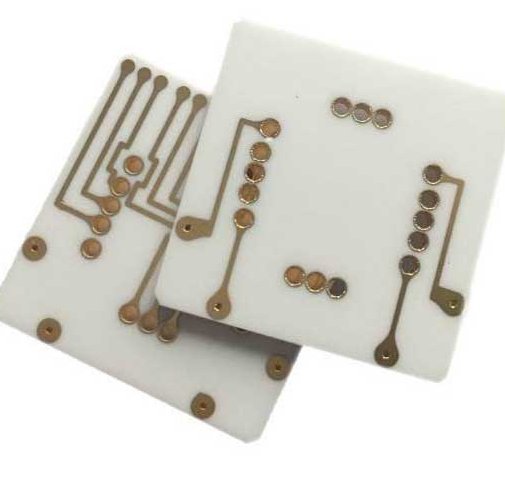
Single-sided ceramic PCBs
A single-sided ceramic circuit places its functional conductor pattern on one face. It can suit simple sensors, heaters, hybrids and light-source carriers when routing and attachment permit.
Read the guide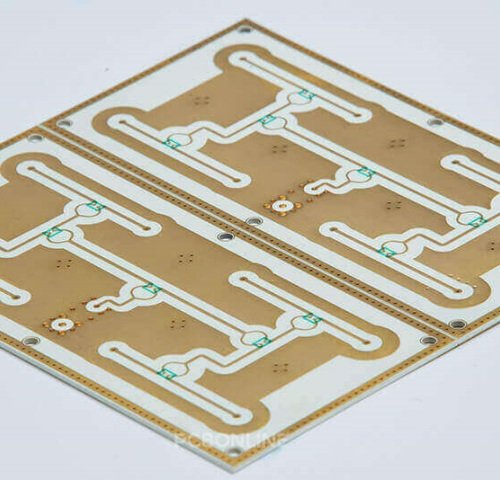
Double-sided ceramic PCBs
Double-sided ceramic circuits use metal on both faces for electrical routing, thermal attachment or both. Connections between faces must be specified as part of the chosen manufacturing process.
Read the guide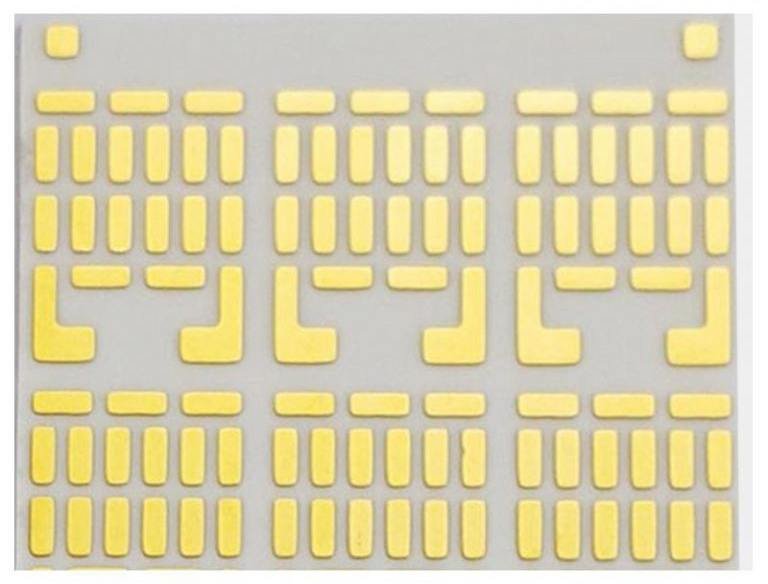
Multilayer ceramic PCBs and interconnects
Multilayer ceramic circuits integrate routing across several conductor levels. LTCC and HTCC are common co-fired approaches, while other builds require a specifically qualified dielectric and metallization system.
Read the guide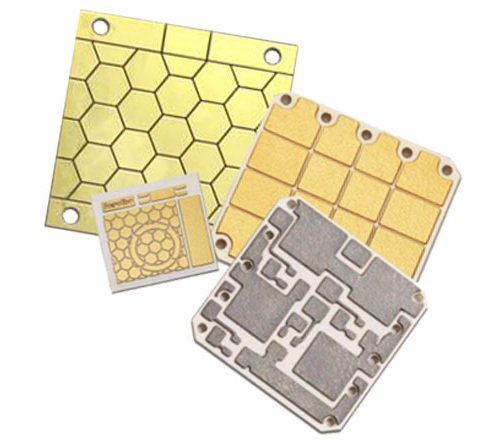
Ceramic power substrates
Ceramic power substrates combine electrically isolated circuits with a heat path from semiconductor devices to the cooling assembly. DBC and AMB are important construction families.
Read the guide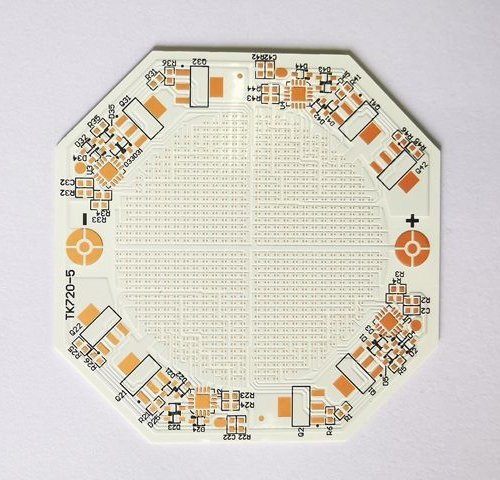
Ceramic LED circuit boards
Ceramic LED boards provide electrical routing and a thermal path beneath light-emitting devices. The design must also account for optical surfaces, attachment and package geometry.
Read the guide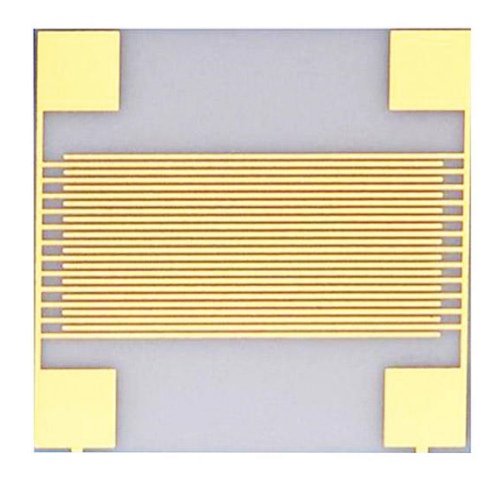
RF and microwave ceramic substrates
RF ceramic circuit carriers use controlled dielectric and conductor structures to route signals, connect devices and integrate package functions. Material data must match the operating frequency.
Read the guide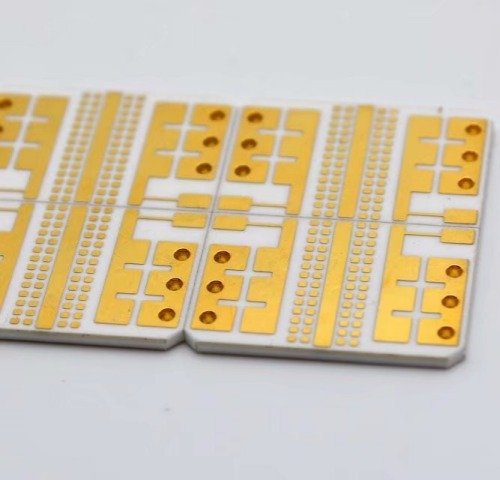
Ceramic laser diode submounts
Laser submounts must transfer concentrated heat while maintaining attachment quality and positional stability. AlN and other specialized thermal constructions are evaluated at the package level.
Read the guide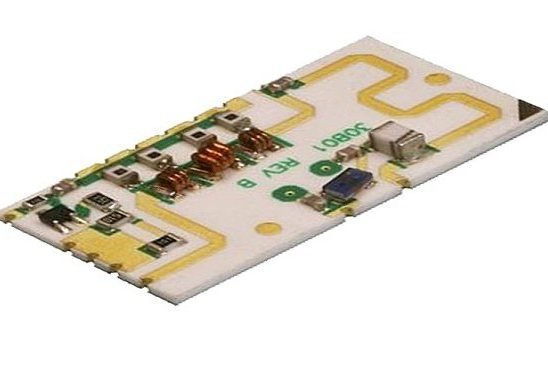
Ceramic hybrid circuits
Hybrid circuits combine printed or deposited functions with attached components on a ceramic carrier. Thick-film and thin-film approaches offer different routes to integration and precision.
Read the guide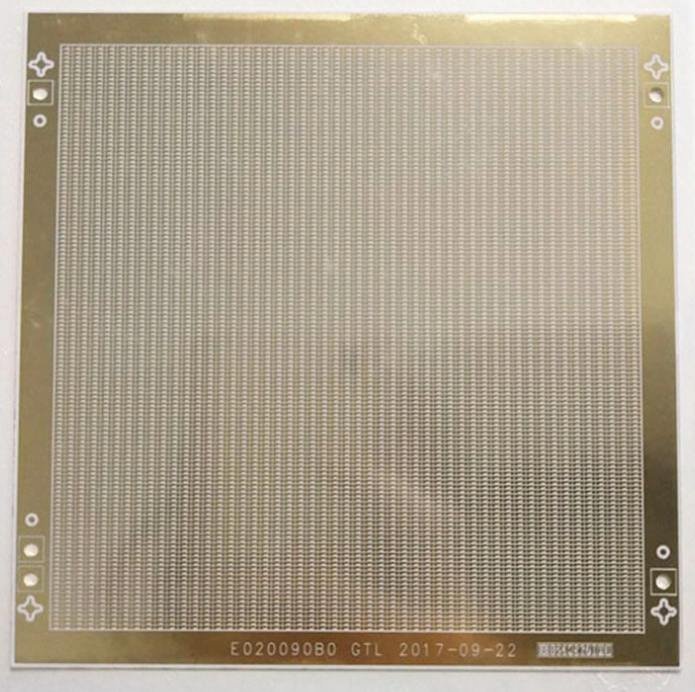
Ceramic heater circuits
Ceramic heaters use resistive patterns and a substrate to create a controlled temperature field. Material selection can aim to spread heat or confine it, depending on the application.
Read the guide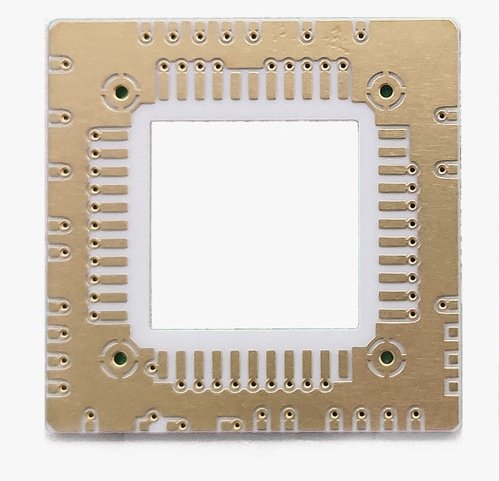
Hermetic ceramic electronic packages
A hermetic ceramic package combines a ceramic body, electrical feedthroughs and a sealing system. The completed package, rather than the bare substrate, must meet the specified leak and environmental requirements.
Read the guide